
Why Understanding Glen Head Property Taxes Matters
Glen Head property taxes are among the highest in the nation, with homeowners in Nassau County paying more than 4 times what the average American pays in property taxes. If you own property in Glen Head (zip code 11545), where the median home price is $901,000, understanding how your taxes work isn’t optional—protecting your financial future.
Quick Facts About Glen Head Property Taxes:
- Median Home Price: $901,000 (zip code 11545)
- Tax Calculation: Assessed Value × Tax Rate = Your Tax Bill
- Tax Components: County + Town of Oyster Bay + School District + Special Districts
- Nassau County Median Tax Bill (2019): $14,872
- Average Tax Rate: 2.24% (per SmartAsset)
- Tax Rate Range: $0.03 to $18.05 per $1,000 for municipal taxes
- School Tax Rate Range: $10.68 to $42.63 per $1,000
- Assessment Notices: Sent mid-May annually
- Grievance Deadline: Typically March 3rd
- Payment Portal: Town of Oyster Bay Receiver of Taxes
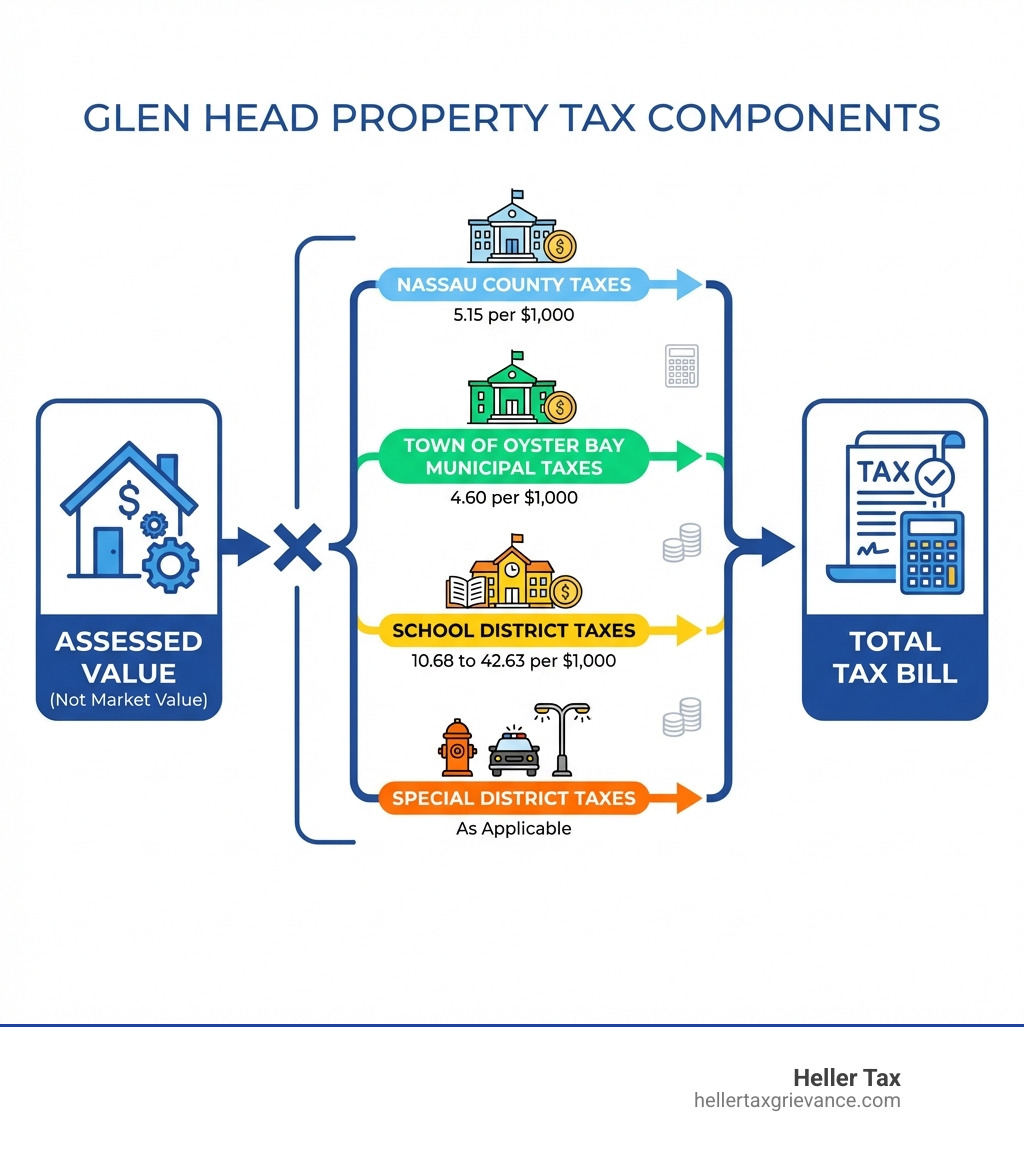
Your property tax bill combines multiple layers: Nassau County taxes, Town of Oyster Bay municipal taxes, your school district taxes, and any special district charges. Each jurisdiction sets its own rate, which is then applied to your property’s assessed value—not its market value.
The difference between these two values matters tremendously. While your home might be worth $901,000 on the market, your assessed value (what you’re actually taxed on) depends on exemptions, the Level of Assessment (LOA), and equalization rates set by the county.
I’m Adam Heller, and I’ve been helping Long Island property owners steer the complex world of property taxes since 2006, after selling my real estate firm to focus entirely on tax grievance. Over the years, my team has saved clients more than $60 million on their Glen Head property taxes and assessments across Nassau County, including reductions of over $80,000 over a 10-year period for individual properties.
Understanding Your Glen Head Property Tax Bill
Understanding your property tax bill can feel like deciphering ancient hieroglyphs. But for homeowners in Glen Head, knowing the components of your bill, especially the distinction between market value and assessed value, is crucial. It’s the foundation upon which your entire tax burden is built.
Market Value vs. Assessed Value: What’s the Difference?
When we talk about property values, two terms often come up: market value and assessed value. While they sound similar, they serve very different purposes, especially for your Glen Head property taxes.
- Market Value: This is what a willing buyer would pay a willing seller in an open, competitive market. It’s influenced by a myriad of factors like location, property condition, recent sales of comparable homes, economic trends, and even the local school district. In Glen Head, with a median home price of $901,000, it’s clear that market values are significant.
- Assessed Value: This is the value determined by the Nassau County Assessor for tax purposes. It’s typically a percentage of your property’s market value, minus any applicable exemptions or limits set by local laws. This is the figure that your tax rate is actually applied to.
The Nassau County Assessor plays a pivotal role in this process, estimating your property’s market value. These assessment notices are typically sent out in the spring each year, usually by mid-May. These notices are important as they include both your property’s estimated market value and its assessed value, along with an estimate of your upcoming tax bill.
New York State also uses something called a Level of Assessment (LOA) and equalization rates to ensure fair taxation across different municipalities. An LOA is the percentage of market value at which properties in a community are assessed. Equalization rates are then applied to adjust these assessments so that they reflect a common standard, helping to fairly distribute the tax burden among communities with different assessment practices. It’s a complex system, but understanding these basics helps explain your tax bill.
How Your Tax Bill is Calculated
So, how exactly do all these values translate into the actual amount you pay in Glen Head property taxes? The calculation is relatively straightforward once you have the key figures:
Taxable Assessed Value × Tax Rate = Your Tax Bill
However, the complexity arises from the multiple taxing jurisdictions that contribute to your total bill:
- Nassau County Taxes: This portion funds county-wide services such as public safety, health, social services, and infrastructure.
- Town of Oyster Bay Taxes: Glen Head falls within the Town of Oyster Bay, and this component covers local town services like sanitation, highways, parks, and general administration.
- School District Taxes: This is often the largest portion of your property tax bill. Glen Head is served by various school districts, and these taxes fund local public education.
- Special District Taxes: These are additional charges for specific services provided to your area, such as fire protection, water, sewer, lighting, or library districts.
Unlike some other counties where school taxes might be integrated into a single county rate, Nassau County’s system means you’ll see these distinct charges. Each of these jurisdictions adopts its own budget annually, which then forms the basis for the tax rates applied to your property. This multi-layered approach means your tax bill is a reflection of many different local government services and their associated costs.
The Impact of Glen Head’s High Home Values
It’s no secret that Glen Head boasts some of the most desirable—and expensive—real estate on Long Island. With the median home price in Glen Head (zip code 11545) at a significant $901,000, it’s natural that property taxes here are a major financial consideration.
The connection between high home values and your property tax burden is direct. While the assessed value might be a percentage of the market value, a higher market value generally leads to a higher assessed value, and consequently, a higher tax bill. Nassau County is already renowned for having some of the highest real estate property taxes in the U.S., and Glen Head’s liftd property values certainly contribute to this.
This isn’t just about paying more; it’s about ensuring that your assessment is fair and accurate. In an area with such dynamic real estate values, regular review of your property assessment is not just a good idea, it’s a financial imperative. An inflated assessment, even by a small margin, can lead to thousands of dollars in overpayment on your Glen Head property taxes over time. This is why we are so passionate about helping homeowners ensure their assessments are as low as legally allowed.
Glen Head Property Taxes in Context: A Nassau County Comparison
To truly appreciate the landscape of Glen Head property taxes, it helps to see how they stack up against the broader picture in Nassau County and beyond. The numbers can be quite eye-opening.
Nassau County is infamous for its high property taxes. In 2019, the median tax bill in Nassau County was a staggering $14,872. To put this into perspective, Nassau County residents pay more than four times what the average American pays in property taxes. This makes understanding and managing your tax bill not just a smart financial move, but a necessary one.
According to SmartAsset, Nassau County’s average tax rate stands at 2.24%. However, this is just an average. The reality is that property tax amounts and percentages vary significantly based on individual municipalities and school districts. We’ve seen tax rates in Nassau County range from as low as $0.03 to as high as $18.05 per $1,000 of full value for municipal taxes. School district tax rates, which often make up the largest portion of your bill, can stretch even further, from $10.68 to a whopping $42.63 per $1,000.
Here’s a snapshot of how the Town of Oyster Bay (where Glen Head is located) compares to some other areas in Nassau County based on 2021 rates:
| Municipality / School District | 2021 Municipal Tax Rate (per $1,000 of Full Value) | 2021 School District Tax Rate (per $1,000 of Full Value) |
|---|---|---|
| Town of Oyster Bay | $4.60 | $4.60 (for Town portion of school tax) |
| City of Glen Cove | $7.45 | $7.45 |
| City of Long Beach | $7.21 | $7.21 |
| Town of Hempstead | $2.58 | $2.58 (for Town portion of school tax) |
| Town of North Hempstead | $1.49 | $1.49 (for Town portion of school tax) |
| Sample School Districts | N/A | Range from $10.68 (Roslyn) to $42.53 (Levittown) |
Note: The municipal tax rate for the Town of Oyster Bay listed here is a general rate; village rates within the town can vary significantly, from $0.68 to $5.32 per $1,000. School district rates can also vary widely depending on the specific district your Glen Head property is located within.
As you can see, even within Nassau County, there’s a wide spectrum of rates. This variability underscores why a detailed understanding of your specific property’s assessment and the rates applied to it is so important. What might seem like a small difference in a rate can translate into thousands of dollars on your annual tax bill, especially with Glen Head’s high home values.
Managing Your Taxes: Payments, Deadlines, and Research
Navigating property taxes in Glen Head extends beyond just understanding your bill; it also involves knowing who to pay, how to pay, when to pay, and where to find reliable information. Proactive management of these aspects can save you stress, penalties, and even money.
Who Assesses and Collects Your Taxes?
In Nassau County, the responsibilities for property assessment and tax collection are divided among several key entities:
- Nassau County Department of Assessment: This department is primarily responsible for valuing all properties in Nassau County for tax purposes. They estimate your market value, determine your assessed value, and handle applications for STAR exemptions. Any questions about your property’s valuation or assessment roll data should generally start here.
- Town of Oyster Bay Receiver of Taxes: Since Glen Head is located within the Town of Oyster Bay, this office is your primary point of contact for billing and collecting your general and school property taxes. The Receiver of Taxes office handles the billing for over 100,000 parcels and acts as a collection agency for state, county, town, special district, and school district taxes. They also provide information regarding property tax exemptions for veterans, senior citizens, and clergy. The Receiver of Taxes is an elected official, serving a four-year term, and their office is dedicated to efficient tax collection and record-keeping.
- Nassau County Treasurer’s Office: While the Receiver of Taxes handles the initial collection, if your taxes become delinquent (unpaid after the due date), they are then transferred to the Nassau County Treasurer’s Office for further action. It’s always best to avoid this, as penalties and interest can accrue quickly.
Viewing and Paying Your Tax Bill Online
Gone are the days when you had to wait for a paper bill to arrive or stand in line to pay your Glen Head property taxes. Most municipalities, including the Town of Oyster Bay, now offer convenient online portals.
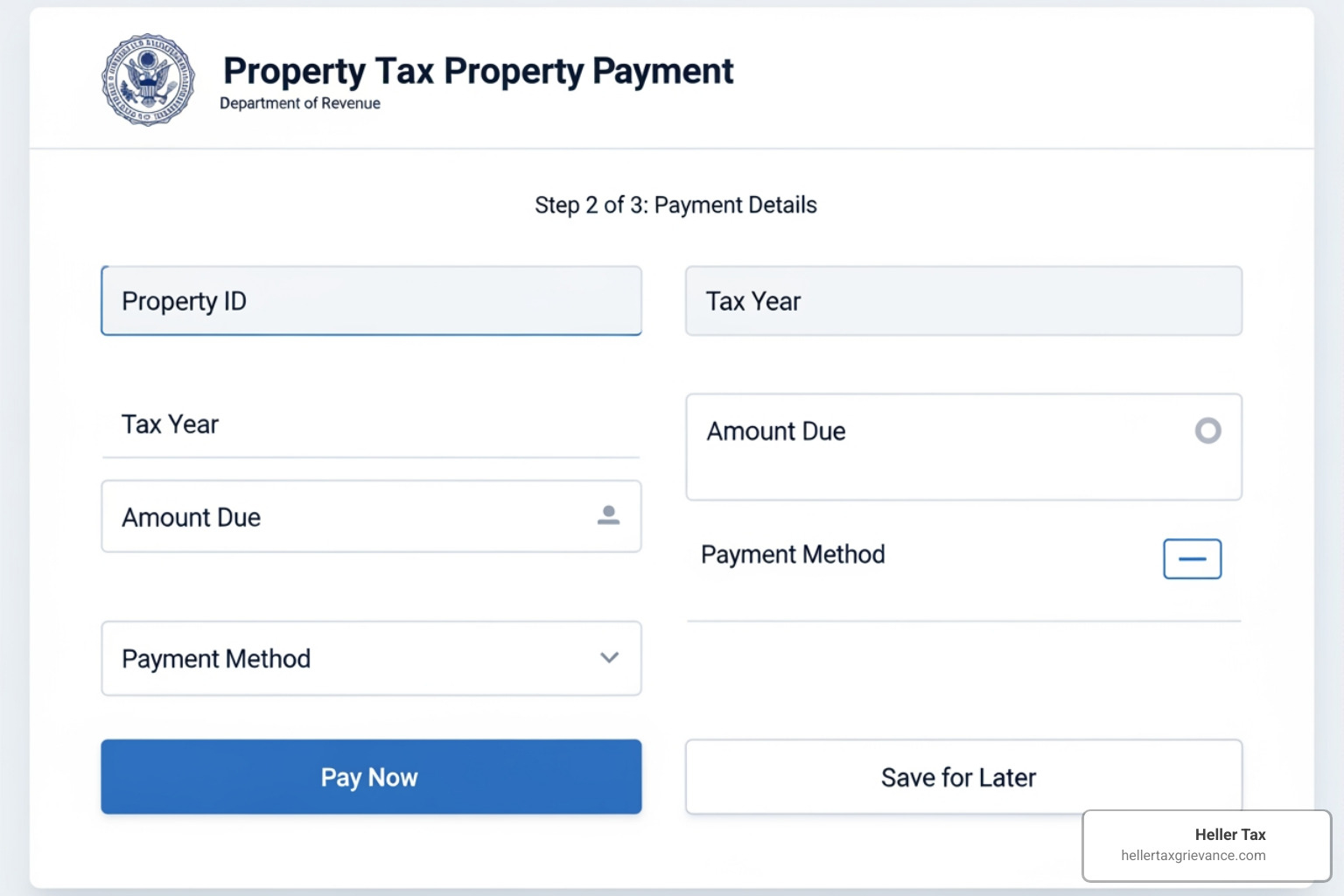
To view and pay your Town of Oyster Bay taxes online, you can use their official portal: Pay your Oyster Bay taxes online.
Here’s what you typically need to know about online payments:
- Searching for Your Bill: You’ll usually need your Parcel ID (which includes your school district, section, block, and lot numbers) or your tax bill number. If you don’t have these, you can often look up your Parcel ID by your property address through the Nassau County’s Land Records Viewer.
- Payment Methods: Online portals generally accept credit cards (MasterCard, VISA, American Express, Find) and electronic checks (e-checks).
- Fees: Be aware that convenience fees often apply to online payments. For credit card payments, this is typically a percentage of your total tax payment (e.g., 2.3% with a minimum fee of $1.50). Electronic checks usually incur a flat fee (e.g., $1.50 per transaction). New York State law mandates that the Town of Oyster Bay does not receive any portion of these service fees; they are retained by the payment processing vendors.
While the fees might seem like an extra cost, the convenience of paying from home, avoiding late fees, and having instant confirmation can often outweigh them.
Key Tax Deadlines and Timelines
Missing a property tax deadline can lead to penalties and interest, adding unnecessary costs to your Glen Head property taxes. It’s crucial to mark these dates on your calendar. While specific dates can vary slightly year to year and by district, here’s a general timeline for Nassau County:
- General Tax Bills: These typically cover county and town taxes. They are usually mailed out in December and are due in two installments:
- The first half is generally due in January.
- The second half is typically due in May.
- School Tax Bills: These are usually mailed out in September and are also due in two installments:
- The first half is generally due in October.
- The second half is typically due in December.
Always verify the exact due dates on your official tax bill or by checking the Town of Oyster Bay Receiver of Taxes website. If a payment window closes, delinquent taxes must be paid through the Nassau County Treasurer’s Office, where additional fees will apply. Timely payment is always your best strategy!
Resources for Researching Your Glen Head Property Taxes
Knowledge is power, especially when it comes to your Glen Head property taxes. Fortunately, Nassau County provides excellent online tools to research your property and its tax history.
The Nassau County Land Records Viewer is an invaluable resource. This tool integrates data from the Department of Assessment and the County’s Geographic Information System (GIS), offering a wealth of information at your fingertips. Through the viewer, you can:
- Research Past Tax Data: See historical tax amounts paid on your property and others.
- View Assessment Information: Access assessment roll data, including market value, assessed value, and the details used to determine them.
- Find Comparable Sales: Look up recent sales of similar properties in your area. This is particularly useful if you believe your assessment is too high, as comparable sales data is key evidence in a tax grievance.
- Check Exemption Status: See which exemptions are applied to your property and their respective amounts.
- Access Property Photographs and Tax Maps: Get a visual understanding of your property and its boundaries.
While the Land Records Viewer is comprehensive, Nassau County makes no warranties about the absolute accuracy or completeness of the information. However, it remains the best public tool for in-depth property tax research. Utilizing this resource regularly can help you stay informed and identify potential issues with your assessment.
Reducing Your Bill: Exemptions and the Grievance Process
After understanding the intricacies of your Glen Head property taxes, the next logical step is to explore ways to reduce them. Many homeowners are unaware of the exemptions they qualify for or the powerful tool of a property tax grievance. We believe in empowering homeowners to proactively manage their taxes, which often means lowering their assessment and taking advantage of every tax-saving opportunity available.
Available Property Tax Exemptions for Your Glen Head Property Taxes
Property tax exemptions can significantly reduce your taxable assessed value, leading to a lower tax bill. Many New York State and Nassau County residents qualify for one or more of these programs. It’s crucial to apply for these by the specified deadlines, as they are not automatically granted.
Here are some common exemptions relevant to Glen Head residents:
- Basic STAR Program: This program provides a partial exemption from school property taxes for owner-occupied primary residences. To be eligible, your household income (for the homeowner and spouse) must not exceed $500,000. It’s a credit that’s mailed directly to you by New York State, rather than a reduction on your tax bill.
- Enhanced STAR Program: This is an improved version of the STAR exemption for senior citizens (all owners must be 65 or older, or one spouse if married) whose household income is below a certain limit (which changes annually). Like Basic STAR, it’s a state-issued credit.
- Senior Citizens’ Exemption (Partial Tax Exemption – RP-467): This exemption offers a property tax reduction of five to fifty percent on county, town, and school taxes, based on the income of all owners. All income, including Social Security and non-taxable income, is counted. All owners must be 65 or older, though for a married couple, only one spouse needs to meet the age requirement. Applications are typically accepted from September 1st through May 1st. For city taxes (if applicable), you’d file at City Hall, and for county taxes, with the Nassau County Department of Assessment.
- Veterans’ Exemption: Eligible veterans (and their unremarried spouses) can receive a reduction in the assessed value of their property. The amount of the exemption depends on the veteran’s service dates, combat status, and disability.
- First Responders’ Exemption: In Nassau County, volunteer firefighters and ambulance workers can receive a 10% property tax exemption on their primary residence after five years of service. This is a well-deserved recognition for those who dedicate their time to our communities.
- Limited Income/Disabilities Exemption: This exemption provides a reduction of up to 50% on the assessed value for homeowners with disabilities and limited income.
Applying for these exemptions can significantly lower your Glen Head property taxes. We always recommend checking eligibility and applying by the specified deadlines, as they are not retroactive.
The Property Tax Grievance Process in Nassau County
Even with exemptions, many homeowners in Glen Head find their property taxes to be unfairly high. This is where the property tax grievance process comes into play. A tax grievance is a formal appeal of your property’s assessed value, arguing that it is too high compared to its actual market value or compared to similar properties in your neighborhood.
The core idea is simple: if your property is over-assessed, you’re paying more than your fair share of Glen Head property taxes. The goal of a grievance is to reduce your assessed value, which directly reduces your tax bill.
Here’s why this process is so important in Nassau County:
- Proving Over-assessment: The burden of proof is on you, the homeowner, to demonstrate that your property’s assessment is inaccurate. This typically involves gathering evidence of your home’s true market value, often through comparable sales data from the Nassau County Land Records Viewer or by obtaining a professional appraisal.
- Annual Filing Period: The opportunity to grieve your taxes is not year-round. In Nassau County, there is a specific annual filing period, and the deadline is crucial. For example, the next deadline for Nassau County property tax appeals is March 3, 2026. Missing this deadline means waiting another year.
- The Power of a Grievance: Our experience at Heller Tax Grievance has shown that relying solely on Nassau County officials to reassess properties doesn’t always lead to the fairest outcome. We’ve saved our clients over $60,000,000 in recent years, with some property tax bills reduced by over $80,000 over a 10-year span. This isn’t about avoiding taxes; it’s about ensuring you pay the lowest legally allowed amount.
- Gathering Evidence: This can be a daunting task for homeowners. It involves researching comparable properties, understanding assessment methodologies, and presenting a compelling case. This is precisely where our expertise comes in.
The tax grievance process is a homeowner’s right and a powerful tool to take control of your Glen Head property taxes. It’s a proactive step that can lead to substantial long-term savings.
Conclusion
Navigating the landscape of Glen Head property taxes can certainly feel like a challenge. With some of the highest property taxes in the nation, driven by a median home price of $901,000, homeowners in this beautiful Nassau County community bear a significant financial burden. However, this high cost is often balanced by the exceptional quality of life, excellent schools, and vibrant community that Glen Head offers.
Understanding your property taxes empowers you. By grasping the difference between market value and assessed value, knowing how your bill is calculated across various jurisdictions like Nassau County, the Town of Oyster Bay, and your local school district, and being aware of payment deadlines and available resources, you gain a significant advantage.
We encourage you to be proactive. Review your assessment annually using tools like the Nassau County Land Records Viewer. Investigate and apply for all property tax exemptions you qualify for, such as the Basic or Improved STAR programs, Senior Citizens’ exemptions, or Veterans’ exemptions. Most importantly, don’t shy away from the tax grievance process if you suspect your property is over-assessed. It’s a fundamental right that can lead to substantial savings.
At Heller Tax Grievance, we’ve dedicated ourselves to helping Long Island homeowners like you take control of their property taxes. With our “You Don’t Pay Unless You Save” guarantee, we make the process easy and risk-free. Our team handles the complexities of gathering evidence and filing your grievance, working tirelessly to ensure you pay the lowest legally allowed amount.
Don’t let high Glen Head property taxes erode your financial peace of mind. Take action today to review your assessment, apply for exemptions, and consider a tax grievance.
Learn more with our comprehensive Nassau County tax grievance guide and start saving on your property taxes.