
Why Realtor Listing Analysis Is the Foundation of Every Smart Home Sale
A thorough realtor listing analysis is the single most important step a seller or agent can take before putting a home on the market. Get it right, and you attract serious buyers fast. Get it wrong, and your listing sits — sometimes for months.
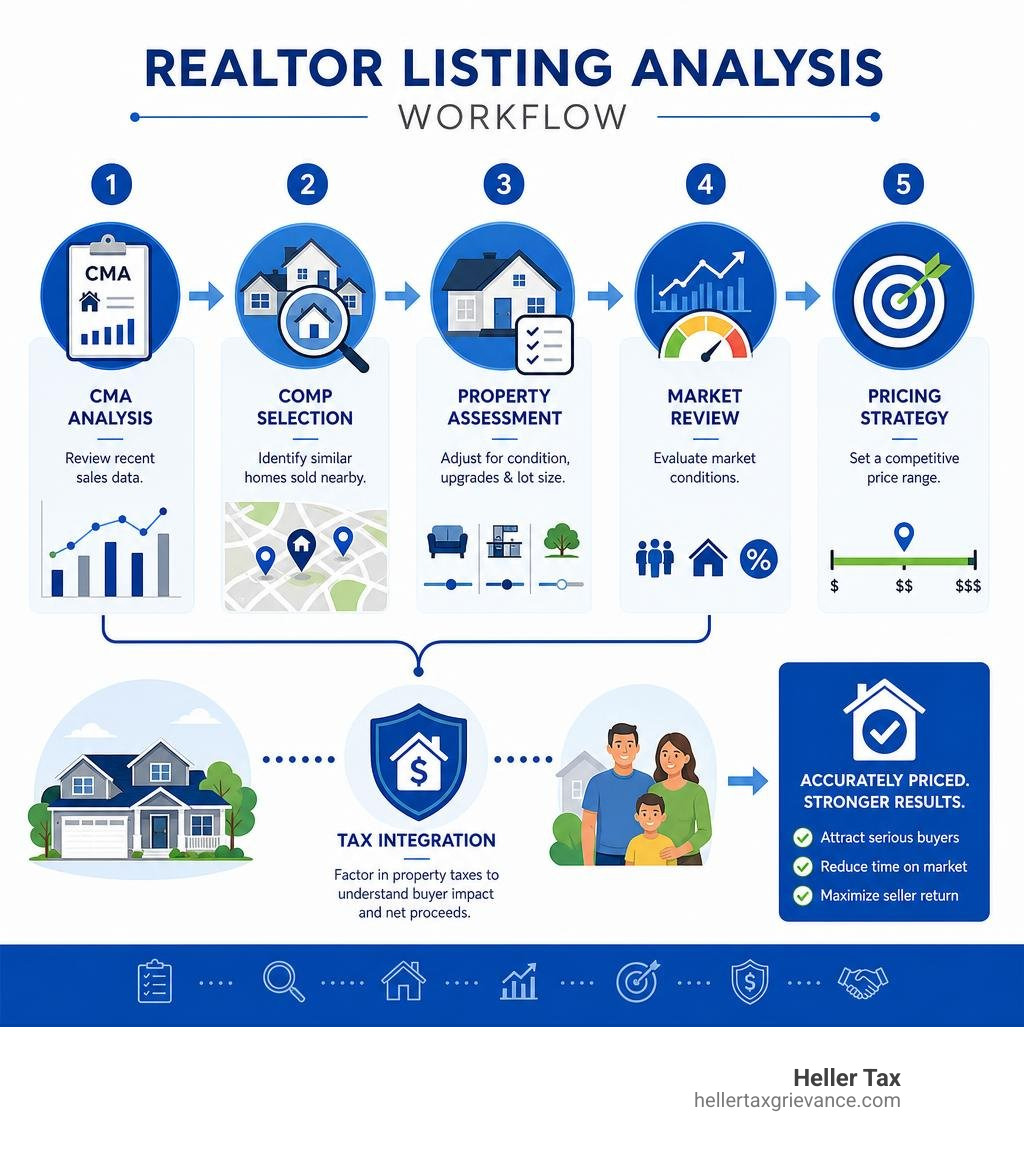
Here’s a quick snapshot of what a realtor listing analysis covers:
| Component | What It Does |
|---|---|
| Comparative Market Analysis (CMA) | Estimates fair market value using recent sold data |
| Comparable property selection | Finds similar homes sold nearby within 3-6 months |
| Property condition assessment | Adjusts value for upgrades, condition, and lot size |
| Market conditions review | Accounts for buyer’s vs. seller’s market, inventory, and rates |
| Pricing strategy | Sets a competitive range to attract buyers and maximize return |
Pricing a home is not a gut call. It’s a data-driven process. And the stakes are real — homes priced accurately using CMA data sell 20-30% faster than overpriced listings.
There’s another factor most sellers overlook entirely: property taxes. On Long Island, high taxes in Nassau and Suffolk Counties can quietly push buyers away — or force sellers to drop their asking price to compensate. A complete listing analysis accounts for this.
I’m Adam Heller, founder of Heller Tax Grievance, and before dedicating my career to reducing property taxes for Long Island homeowners, I spent years running a successful real estate firm where realtor listing analysis was central to every deal I closed. That background gives me a unique perspective on how accurate pricing and property tax burdens are deeply connected — and I’ll walk you through both in this guide.
The Core Components of a Realtor Listing Analysis
At its heart, a realtor listing analysis is an investigative process. It strips away the emotional attachment we all have to our homes and looks at the cold, hard numbers. The primary tool used to achieve this pricing accuracy is the Comparative Market Analysis (CMA).
A CMA is an informal, highly detailed valuation method that real estate professionals use to estimate a home’s market value. Unlike automated algorithms, a professional CMA relies on localized human expertise to interpret raw data. To keep our fingers on the pulse of the local market, we constantly monitor the NYSAR Market Data to track inventory levels, median sales prices, and pending transactions across New York.
If you are a homeowner wondering where your property stands in the current market, you do not have to guess. You can request a Free Listings Analysis to get a clear, data-driven picture of your home’s competitive position.
How Agents Gather and Select Comparable Properties (Comps)
Gathering comparable properties—or “comps”—is where the art meets the science of real estate. To build an accurate valuation, we follow the “rule of three,” aiming for at least three to five highly relevant comps.
Agents select these comps using strict parameters:
- Transaction Status: We prioritize recently sold properties (ideally within the last 3 to 6 months) because they show what buyers actually paid. Active listings tell us what our current competition is, and pending sales indicate where the market is moving right now.
- Geographic Radius: In suburban Long Island communities like Syosset, Massapequa, or Stony Brook, we try to keep our search within a quarter-mile to half-mile radius. Crossing a major highway or school district line can completely change a property’s market value.
- Property Characteristics: Comps must match the subject property in style (e.g., split-level, colonial, ranch), square footage, bedroom/bathroom count, and age.
For a deeper dive into how localized sales data behaves, the Data Analysis of Nassau County Home Sales demonstrates how variables like school districts and property taxes heavily influence final sale prices in our local market.
Key Factors Evaluated in a Realtor Listing Analysis
When we evaluate a property, we look at several critical layers that dictate its market appeal:
- Location: This is the ultimate variable. Identical homes built by the same developer can vary by up to $100,000 simply because one is on a quiet cul-de-sac in Brookville and the other backs up to a busy commercial road or train line.
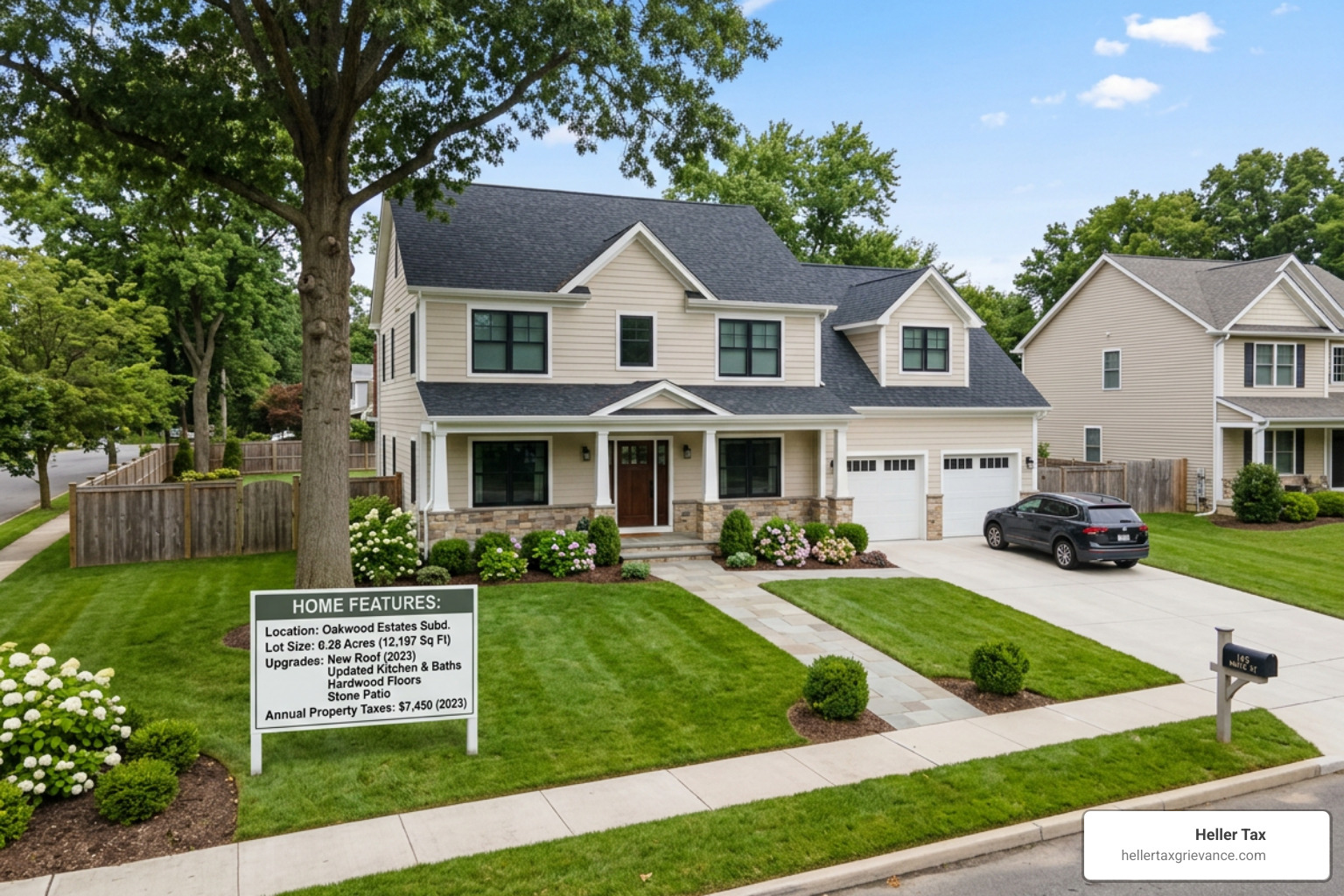
- Property Condition & Upgrades: A home with a brand-new roof, updated siding, and a modern kitchen commands a premium over a home that has not been updated since 1985.
- Lot Size & Usable Land: Flat, usable acreage in Upper Brookville holds far more value than a sloped, wooded lot of the same size that cannot accommodate a pool or patio.
- Local Market Trends: Is inventory rising or falling? Are homes in Deer Park selling above list price, or are price cuts becoming the norm?
Adjusting for Differences Between Subject Properties and Comps
No two homes are completely identical. Therefore, we must make value adjustments to align our comps with the subject property.
If a comparable sold home has a finished basement worth $20,000, but our subject property does not, we subtract $20,000 from the comp’s sale price to see what it would have sold for without that feature. Conversely, if our subject property has a brand-new custom kitchen and the comp has an outdated one, we add the estimated buyer-perceived value of that kitchen to the comp’s baseline price.
Rather than relying on a single, rigid number, we use these adjusted figures to build a strategic pricing range:
- Conservative Price: Designed to stimulate immediate buyer competition and potentially spark a bidding war.
- Market-Supported Price: The sweet spot backed by the strongest comp evidence.
- Aggressive Price: A ceiling price that requires a flawless property presentation and a highly motivated buyer.
Understanding the difference between various valuation methods is key for both sellers and buyers:
| Feature | Comparative Market Analysis (CMA) | Formal Appraisal | Online Valuation (AVM) |
|---|---|---|---|
| Performed By | Licensed Real Estate Agent | Licensed/Certified Appraiser | Computer Algorithm (e.g., Zestimate) |
| Purpose | Establish listing or offer strategy | Secure mortgage lender approval | Quick, automated estimate |
| Cost | Usually free as part of agent service | $400 – $600+ (paid by buyer/lender) | Free |
| Accuracy | High (localized, human verified) | High (strict regulatory guidelines) | Moderate to Low (misses interior condition) |
How Market Conditions Influence Pricing Strategy
A listing analysis is only as good as its timing. In June 2027, we continue to navigate a dynamic real estate landscape where interest rates and inventory levels dictate buyer behavior.
- Seller’s Market: When inventory is low, we can price more aggressively. Buyers are willing to overlook minor flaws to secure a home.
- Buyer’s Market: When inventory climbs, pricing must be razor-sharp. If your home is overpriced by even 2%, buyers will simply move on to the next listing.
- The Danger of Overpricing: The biggest mistake a seller can make is “testing the market” with an inflated price. Overpriced homes sit on the market, develop a stigma, and eventually sell for less than they would have if priced correctly from day one.
- Handling Seller Objections: When a seller says, “But my neighbor sold for $900,000!” we must gently point out the structural differences, or highlight that the neighbor’s sale occurred when interest rates were lower. Data beats emotion every single time.
Advanced Tools and AI in Modern Listing Analysis
The days of printing out stack after stack of MLS sheets are long gone. Today, top-producing real estate professionals leverage advanced technology to perform faster, more accurate analyses.
AI-powered listing analysis tools can reduce manual CMA preparation time by up to 70%, allowing agents to focus on strategic positioning rather than manual data entry. For instance, the ListingLens AI Chrome Extension integrates directly with major listing platforms to score pricing, identify potential listing red flags, and even draft initial client communications in seconds.
Additionally, platforms like StreetEasy provide Enhanced Listing Insights that offer dynamic performance signals. These tools analyze historical listing data to distinguish between controllable strategy factors (like pricing and presentation) and uncontrollable market dynamics, giving agents the power to make proactive strategy adjustments.
Structuring a Repeatable Workflow for Pre-Appointment Realtor Listing Analysis
To deliver consistent results, successful agents do not wing it. They follow a repeatable, data-driven workflow before every single listing appointment:
- Intake and Property Research: Gather all public records, past listing history, and tax details.
- Initial Comp Pull: Run a broad MLS search to capture active, pending, and sold properties.
- Comp Categorization: Group comps into Strong (direct matches), Context (helps show market direction), and Weak (outliers to explain and exclude).
- AI-Assisted Analysis: Use tools like ChatGPT or specialized real estate models to organize raw data, calculate absorption rates, and draft clear pricing narratives. You can learn how to build these prompts in this guide on Real Estate Market Analysis using AI.
- Pre-Appointment Delivery: Do not wait until you walk through the door to show your work. As outlined in the strategy to Send Market Analysis Before Appointment, sending a professional, branded market analysis 24 to 48 hours before your meeting builds massive trust and changes the dynamic of the listing appointment from a sales pitch into a collaborative strategy session.
Adopting this high-tech, structured approach is one of the 6 Habits of Top Agents that separates industry leaders from the rest of the pack.
Integrating Property Taxes into Your Listing Analysis: Nassau and Suffolk Counties
If you are analyzing real estate on Long Island, you cannot talk about home prices without talking about property taxes.
In Nassau and Suffolk Counties, property taxes are among the highest in the country. A home in Farmingdale or Deer Park with a $15,000 tax bill is far more affordable to a buyer than an identical home across town with a $22,000 tax bill. High property taxes directly eat into a buyer’s monthly purchasing power, forcing them to make lower offers on high-tax homes.
This is where integrating a tax grievance strategy into your realtor listing analysis becomes a massive competitive advantage. If a home’s taxes are over-assessed, the listing agent should advise the seller to file a tax grievance immediately.
The Long Island Tax Grievance Calendar
To help your clients, you must understand the county and town-level tax calendars and strict filing deadlines, focusing strictly on the Nassau County and Suffolk County processes rather than village-level systems:
- Nassau County: The tax grievance filing period typically runs from January 2nd to March 1st each year (though deadlines are occasionally extended by the county). This grievance challenges the tentative assessment roll for the tax year starting the following year.
- Suffolk County: In Suffolk, Grievance Day is always the third Tuesday in May. Applications must be received by the local town assessor on or before this date.
By identifying over-assessed properties early and filing a grievance, sellers can market their homes with a pending tax reduction. This simple move reassures buyers that their future monthly payments will go down, making the listing instantly more attractive. Understanding how property taxes impact transaction velocity is one of the key Habits of Successful Real Estate Agents working on Long Island today.
Frequently Asked Questions About Home Valuation
What is the difference between a CMA and a formal appraisal?
A CMA is prepared by a real estate agent to help a buyer or seller determine a realistic listing or purchase price. It is an informal estimate based on market knowledge. A formal appraisal is a highly regulated, unbiased valuation performed by a licensed appraiser. Lenders require a formal appraisal to ensure the home’s value covers the mortgage amount before funding a loan.
How often should a listing analysis be updated?
In a volatile market, a listing analysis should be updated every 30 days. Active inventory, mortgage rate fluctuations, and sudden price cuts on competing homes in areas like Rocky Point or Miller Place can shift your home’s competitive position very quickly.
When is the deadline to file a tax grievance in Nassau and Suffolk Counties?
In Nassau County, the standard filing deadline is March 1st (always verify if the county has issued an extension). In Suffolk County, the hard deadline is Grievance Day, which falls on the third Tuesday in May across all Suffolk towns.
Conclusion
An accurate realtor listing analysis is the difference between a seamless, highly profitable home sale and a listing that languishes on the market. By combining robust comparative data, modern AI tools, and a deep understanding of local market nuances, agents and sellers can price homes with absolute confidence.
But on Long Island, pricing is only half the battle. High property taxes can quietly derail even the best pricing strategies.
At Heller Tax Grievance, we specialize in helping Nassau and Suffolk County homeowners secure the largest possible property tax reductions. We have saved our clients over $160 million, and we stand firmly behind our “You Don’t Pay Unless You Save” guarantee. If we do not successfully lower your property taxes, you do not owe us a single penny.
Whether you are a homeowner preparing to sell or a real estate professional looking to offer maximum value to your clients, we are here to help. Partner with Heller Tax Grievance today to lower your property taxes, boost your home’s market value, and make your next listing stand out from the crowd.