
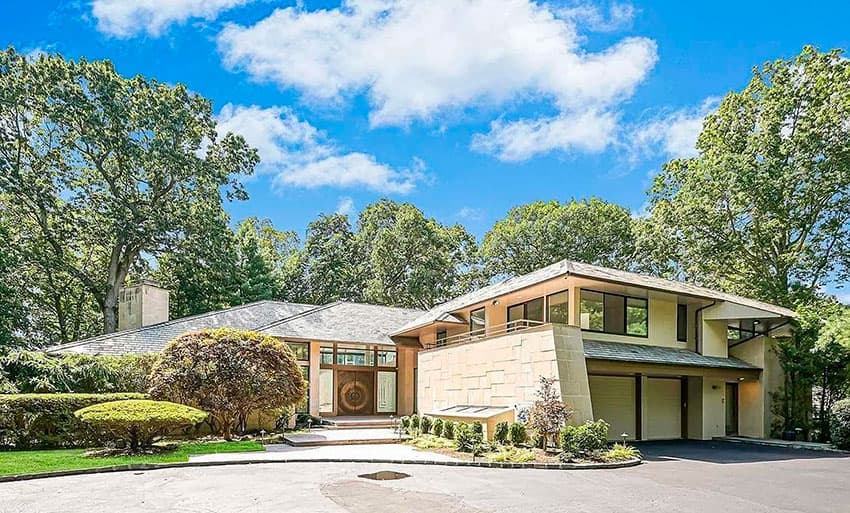
Why Long Island Homeowners Are Overpaying Property Taxes Right Now
Property tax dispute services Long Island are in high demand — and for good reason. Long Island has some of the highest property taxes in the entire country, and many homeowners are paying far more than they should because their assessments don’t reflect actual market value.
Here are the top property tax dispute services available to Long Island homeowners:
| Service Type | Best For | Fee Structure | County Coverage |
|---|---|---|---|
| Full-service tax grievance firm | Homeowners who want hands-off help | 50% of first-year savings, no win = no fee | Nassau & Suffolk |
| Real estate law firm | Complex or commercial cases | Contingency-based, may vary | Nassau & Suffolk |
| DIY filing (Form RP-524) | Budget-conscious owners comfortable with paperwork | Free to file | Nassau & Suffolk |
| Property tax consultant | Assessment analysis and evidence prep | Varies; often contingency-based | Nassau & Suffolk |
Key deadlines to know:
- Nassau County: File by March 1 with the Assessment Review Commission (ARC)
- Suffolk County: File by the third Tuesday in May with the Board of Assessment Review (BAR)
Missing these deadlines means waiting a full year to try again — so timing matters.
The core issue is simple: the county or town assesses your home’s value, then tax you based on that number. If that number is too high — due to outdated data, clerical errors, or shifts in the market — you overpay. A property tax grievance is the formal process to challenge that number and bring your tax bill in line with reality.
The good news? Filing a grievance cannot raise your taxes. There is no downside to checking whether you’re overpaying.
I’m Adam Heller, founder of Heller & Consultants Tax Grievance, and I’ve spent my career helping Long Island homeowners navigate property tax dispute services Long Island after years running a real estate firm where I saw how inflated tax bills hurt both buyers and sellers. Since founding our firm in 2007, our team has saved Long Island homeowners over $160 million in property taxes — including the record for the largest single reductions in both Nassau and Suffolk counties.
Understanding Property Tax Dispute Services Long Island
When we talk about property tax dispute services Long Island, we are referring to the professional assistance provided to homeowners who believe their property is being over-assessed. On Long Island, your tax bill is determined by a simple (but often flawed) formula: your property’s assessed value multiplied by the local tax rate. If the county thinks your home is worth $800,000, but the market says it’s only worth $700,000, you are effectively paying a “penalty tax” on $100,000 of value that doesn’t exist.
A property tax grievance is the formal administrative process used to contest this assessment. Many people ask us who is eligible to file. The answer is broader than you might think! Any person who pays property taxes on a specific parcel can grieve. This includes:
- The property owner of record.
- A person who has purchased the property but hasn’t had the deed recorded yet.
- A tenant who is required to pay the property taxes pursuant to a written lease or agreement.
To get a full handle on the basics, we recommend checking out our Property Tax Grievance Complete Guide. The goal of the grievance is to prove that your “Fair Market Value” is lower than what the tax man says it is. Because New York uses an “Assessment Ratio” (a percentage of market value), the math can get a bit fuzzy. That is where professional property tax dispute services Long Island come in to clear the air. You can learn more about the specific mechanics in our breakdown of The Tax Grievance Process and How It Works.
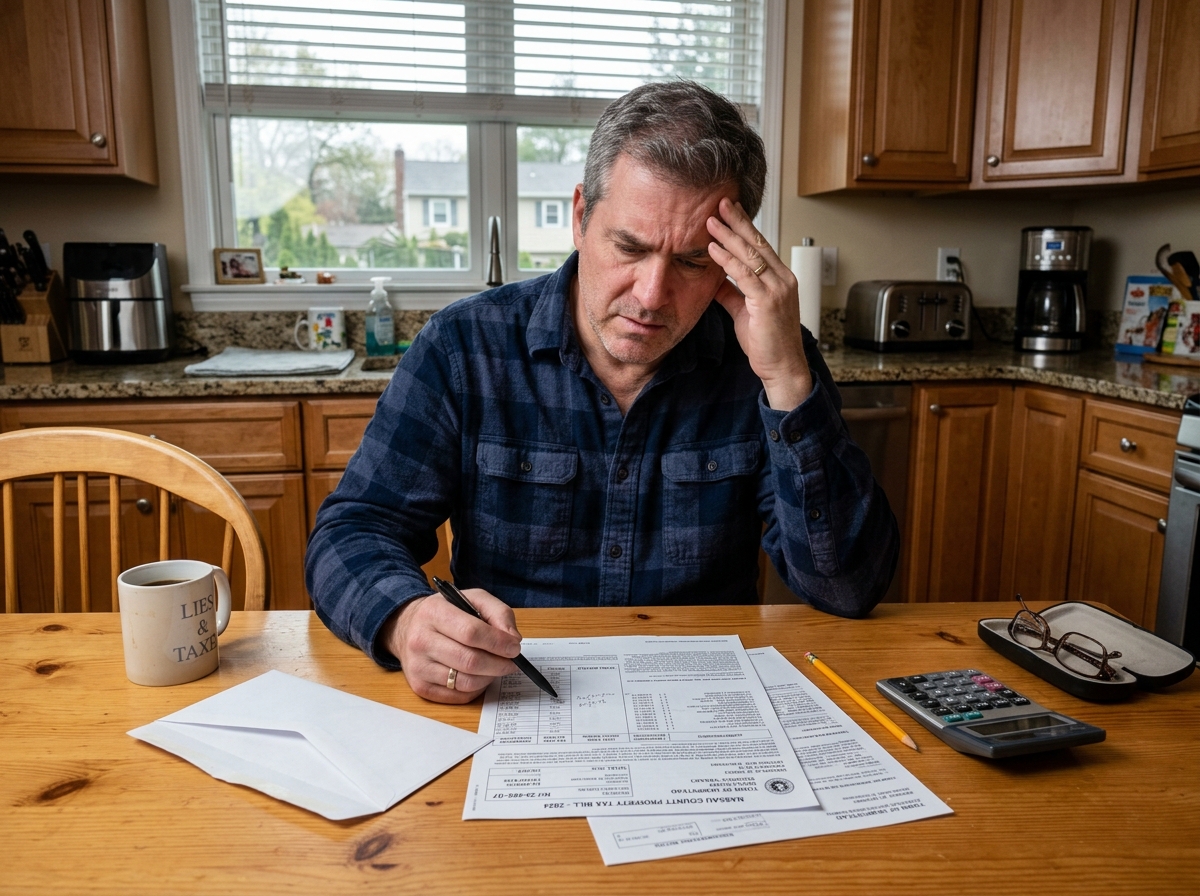
Why Use Property Tax Dispute Services Long Island?
While you are certainly allowed to file a grievance on your own, there are 5 Reasons Hire Firm File LI Tax Grievance that most homeowners find compelling.
First and foremost is expertise in market analysis. Proving your home is over-assessed requires more than just a “feeling” that taxes are too high; it requires hard data. We use sophisticated software and deep local knowledge to find “comparables”—similar homes in your area that have sold for less than your assessment implies.
We handle the evidence preparation, the filing of all necessary legal forms, and, most importantly, the representation at hearings. If the local Board of Assessment Review (BAR) or Assessment Review Commission (ARC) denies the initial claim, we take the case to court for you. For a visual breakdown of how we fight for you, take a look at our Tax Grievance Video.
Documentation Needed for a Successful Claim
To win a reduction, you need a “preponderance of evidence.” This isn’t just a fancy legal term; it means you need to show that it is more likely than not that your home is overvalued. Key documentation includes:
- Comparable Sales: Data on at least 3-5 similar homes in your immediate area that sold recently.
- Property Records: Proof of any physical defects or conditions that lower the value (e.g., a cracked foundation or an outdated kitchen).
- Appraisal Data: In some cases, especially in Suffolk County, a professional market analysis or appraisal is vital.
- Residential Profile: A detailed description of your home’s features compared to the county’s records.
You can start the process today by visiting our Applications page, where we’ve streamlined the paperwork to take less than 60 seconds.
Nassau vs. Suffolk: Deadlines and Procedures
One of the most confusing parts of property tax dispute services long island is that the rules change depending on which side of the county line you live on. Nassau and Suffolk operate on completely different calendars and use different administrative bodies.
| Feature | Nassau County | Suffolk County |
|---|---|---|
| Filing Body | Assessment Review Commission (ARC) | Board of Assessment Review (BAR) |
| Primary Deadline | March 1st | Third Tuesday in May |
| Filing Form | Nassau-specific online/paper forms | Form RP-524 |
| Judicial Appeal | SCAR (Small Claims Assessment Review) | SCAR (Small Claims Assessment Review) |
For Nassau residents, the official Appeal Your Assessment – NassauCountyNY.gov portal provides the government’s perspective, but the process can be notoriously bureaucratic.
Nassau County Filing Requirements
Nassau County’s system is unique. Most grievances must be filed by March 1st for the upcoming tax year. The Assessment Review Commission (ARC) handles these initial “protests.” In Nassau, the county often issues “stipulations” (settlement offers) if they agree the assessment is too high.
If you live in Bethpage, Farmingdale, or Syosset, you know that Nassau County assessments have been a hot-button issue for years. We specialize in Nassau County Tax Grievance cases, ensuring that your residential assessment is accurate. For a deeper dive into the specific forms, see Nassau County Grievance Filing Property Tax.
Suffolk County Filing Requirements
Suffolk County follows the standard New York State “Grievance Day,” which is the third Tuesday in May. This is a hard deadline. If you miss it, you are stuck with your current tax bill for another year.
Whether you are in Stony Brook, Miller Place, or Deer Park, the Suffolk Property Tax Grievance process involves filing Form RP-524 with your specific town’s Board of Assessment Review (BAR). For more on why May is such a critical month, read our guide on Suffolk County LI Property Tax Filing Deadline is May.
Costs, Savings, and What to Expect
The most common question we get at Heller & Consultants is: “How much does this cost?” The beauty of our model is that it is entirely risk-free. We operate on a contingency fee basis. This means if we don’t save you money, you don’t owe us a penny for our service.
If we are successful, the standard fee is 50% of the first year’s savings. Some might think, “Half? That sounds like a lot!” But consider this: without the grievance, you would have paid 100% of that money to the county—and you would continue to pay that inflated amount year after year. By hiring property tax dispute services long island, you keep 50% of the savings in year one and 100% of the savings every year after that.
Selecting the Best Property Tax Dispute Services Long Island
When choosing a firm, look at the track record. We have saved homeowners over $160 million. We don’t just “file and forget”; we fight. Our local knowledge of the assessors in places like Brookville, Syosset, and Massapequa gives us a distinct advantage.
Don’t just take our word for it—read our Testimonials to see how we’ve helped your neighbors. You can also learn more About Us and our 30+ years of combined experience.
Potential Savings and Financial Impact
What kind of money are we talking about?
- Nassau County: Average savings are approximately $1,600 per homeowner. We even hold a record reduction of $75,443!
- Suffolk County: Average savings hover around $1,500, with our record reduction sitting at $29,185.
These aren’t just one-time checks; they represent a permanent lowering of your tax base. If you’re wondering why this particular year is so important, check out A 2027 Property Tax Grievance Guide Why This is the Year.
The Legal Path: From BAR to SCAR
If the initial Board of Assessment Review (BAR) or ARC denies your claim, don’t panic. This is actually quite common. The next step is a judicial review known as SCAR (Small Claims Assessment Review).
To file for SCAR, there is a $30 court filing fee. This is a legal proceeding where a hearing officer (often an attorney or real estate expert) reviews the evidence. We represent you in these hearings, so you don’t have to spend your afternoon in a courtroom. If the property is commercial, the process is called “tax certiorari” and involves the Supreme Court, but for most 1-3 family residential homes, SCAR is the path to victory.
Rights of Non-Resident and New Homeowners
If you just bought a home in Upper Brookville or Massapequa, you have a unique advantage. Your purchase price is often the best evidence of “Fair Market Value.” If you paid $600,000 for a home that the county assesses at $800,000, that $200,000 discrepancy is a “slam dunk” for a reduction.
Non-resident owners (like those who own investment properties on the Island) also have specific rights, including the right to request assessment details 15 days before the tentative roll and the right to have hearings scheduled up to 21 days after Grievance Day.
Frequently Asked Questions
We know you have questions. We’ve answered the most common ones on our FAQs page, but here are the “Big Three”:
Can filing a grievance raise my property taxes?
This is the #1 myth that prevents people from saving money. The answer is a resounding NO. By law, the grievance process is a one-way street. The BAR or ARC can only lower your assessment or leave it the same; they cannot use your application as an excuse to raise your taxes. The only way your taxes go up is if the entire county or town undergoes a general reassessment, which happens independently of your grievance.
Does a tax grievance affect my STAR exemption?
Not at all. Your STAR (School Tax Relief) exemption is a separate program based on your income and residency status. Lowering your home’s assessed value via a grievance actually makes your STAR exemption even more effective at reducing your total bill. They are perfectly compatible.
What happens if the Board of Assessment Review denies my claim?
As mentioned, we move to the SCAR stage. You have a 30-day window from the filing of the final assessment roll to appeal a BAR decision. We handle all the paperwork for this transition, re-evaluating the evidence and preparing for a more formal negotiation with the county’s representatives.
Conclusion
Navigating property assessment tax disputes in Long Island doesn’t have to be a headache. At Heller & Consultants Tax Grievance, we’ve turned this complex legal process into a simple, three-step “win” for homeowners. With over $160 million saved, a 4.8-star Google rating, and a “You Don’t Pay Unless You Save” guarantee, there is truly no risk in seeing how much you can save.
Whether you are in Farmingdale, Syosset, or Miller Place, your tax bill shouldn’t be a source of stress. Contact us today or jump straight to our Long Island Property Tax Grievance application to get started. Let’s make sure you aren’t paying a penny more than your fair share.